TCB Pay Portal
 TCB Pay App
 ACH
Processing
 TCB Pay Issuing
 Alert & Notifications
 TCB Pay White-Label
 Integrations
 IT Solutions
 About
Us
 Pricing
 Blog
 Security
 System Status
 Contact Us
 Sign in to TCB Pay Portal
 Sign in to TCB Pay Issuing


 Back to all articles



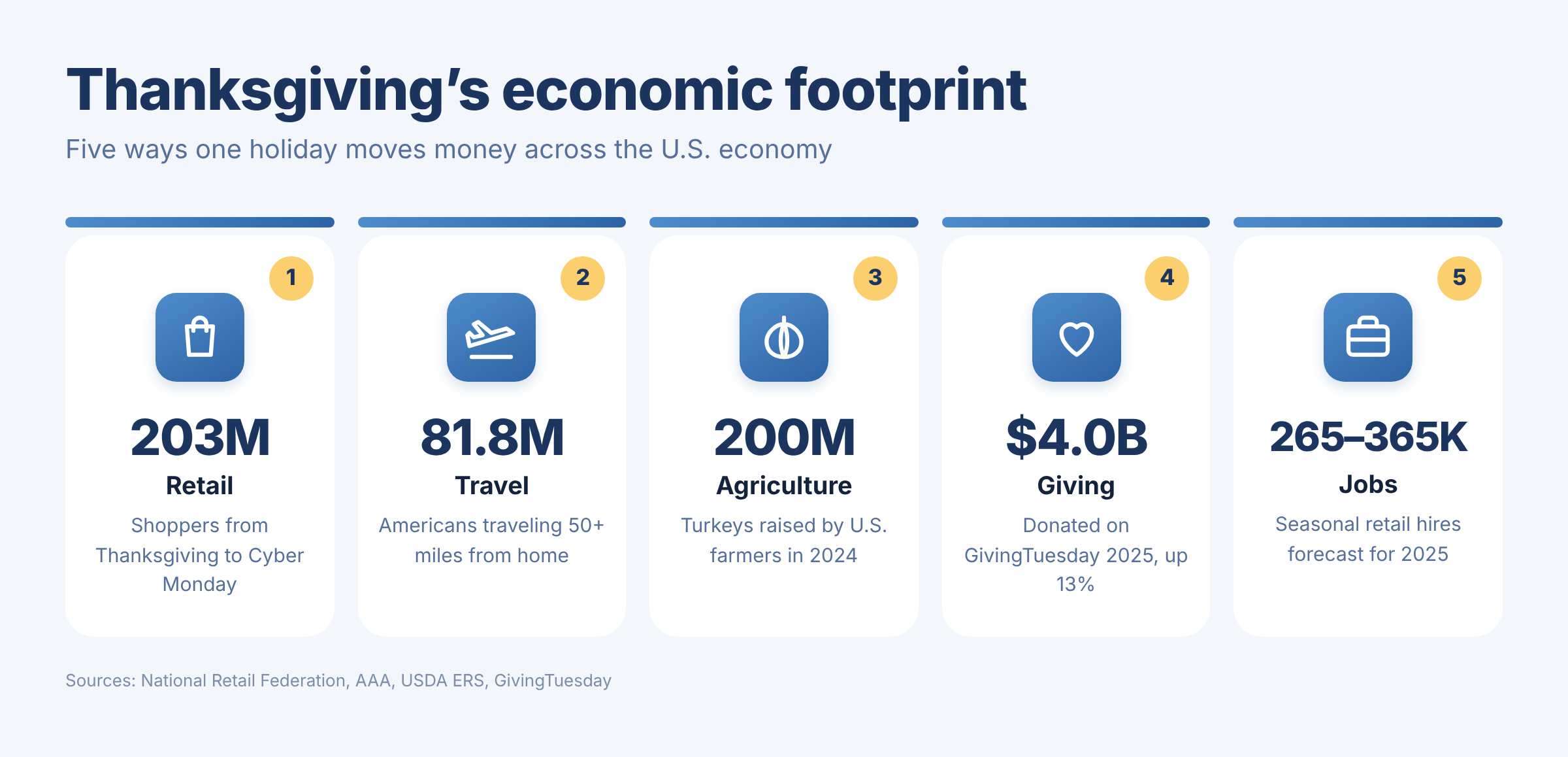
Thanksgiving, celebrated on the fourth Thursday of November, is a holiday built around family, gratitude, and a very full table. But behind the turkey and pumpkin pie, it's also one of the most important economic events of the year in the United States. In a single week, Americans fill grocery carts, pack highways and airports, donate to causes they care about, and kick off a holiday shopping season now worth more than $1 trillion.
Here at TCB Pay, we work with businesses that feel the Thanksgiving effect firsthand — from restaurants and retailers to online stores and nonprofits. So let's look at the five biggest ways Thanksgiving moves money through the economy, backed by the latest numbers.
1. A major boost to retail sales
Thanksgiving is the official starting line of the holiday shopping season. Black Friday, Small Business Saturday, and Cyber Monday follow right behind, and retailers roll out their biggest discounts of the year to win shoppers' attention. For many businesses, the weeks that follow can make or break the entire year.
The scale is hard to overstate:
- A record nearly 203 million people shopped between Thanksgiving Day and Cyber Monday 2025, spending about $340 each on average, according to the National Retail Federation.
- Americans spent $44.2 billion online over those five days, including a record $14.25 billion on Cyber Monday alone, according to Adobe Analytics.
- For 2026, the NRF expects November–December retail sales to grow 4.2% to roughly $1.013 trillion.
Today, those sales happen everywhere at once: in stores, on websites, and more and more on phones. Want the merchant's game plan for this year's rush? Read our Thanksgiving 2026 merchant playbook.
2. Travel and tourism take off
Thanksgiving is one of the busiest travel periods of the year. AAA projected a record 81.8 million Americans would travel at least 50 miles from home over Thanksgiving week in 2025 — 1.6 million more than the year before.
- By car: about 73 million people, nearly 9 out of 10 travelers
- By air: about 6 million domestic flyers, up 2%
All of those trips ripple outward. Gas stations, airlines, buses, and trains see higher demand. Hotels, short-term rentals, restaurants, and attractions get a surge of visitors. Destinations like Las Vegas even use the long weekend to draw holiday crowds — something we explored in our guide to payments in Las Vegas. For hospitality businesses, Thanksgiving week is a critical revenue window.
3. A harvest for agriculture
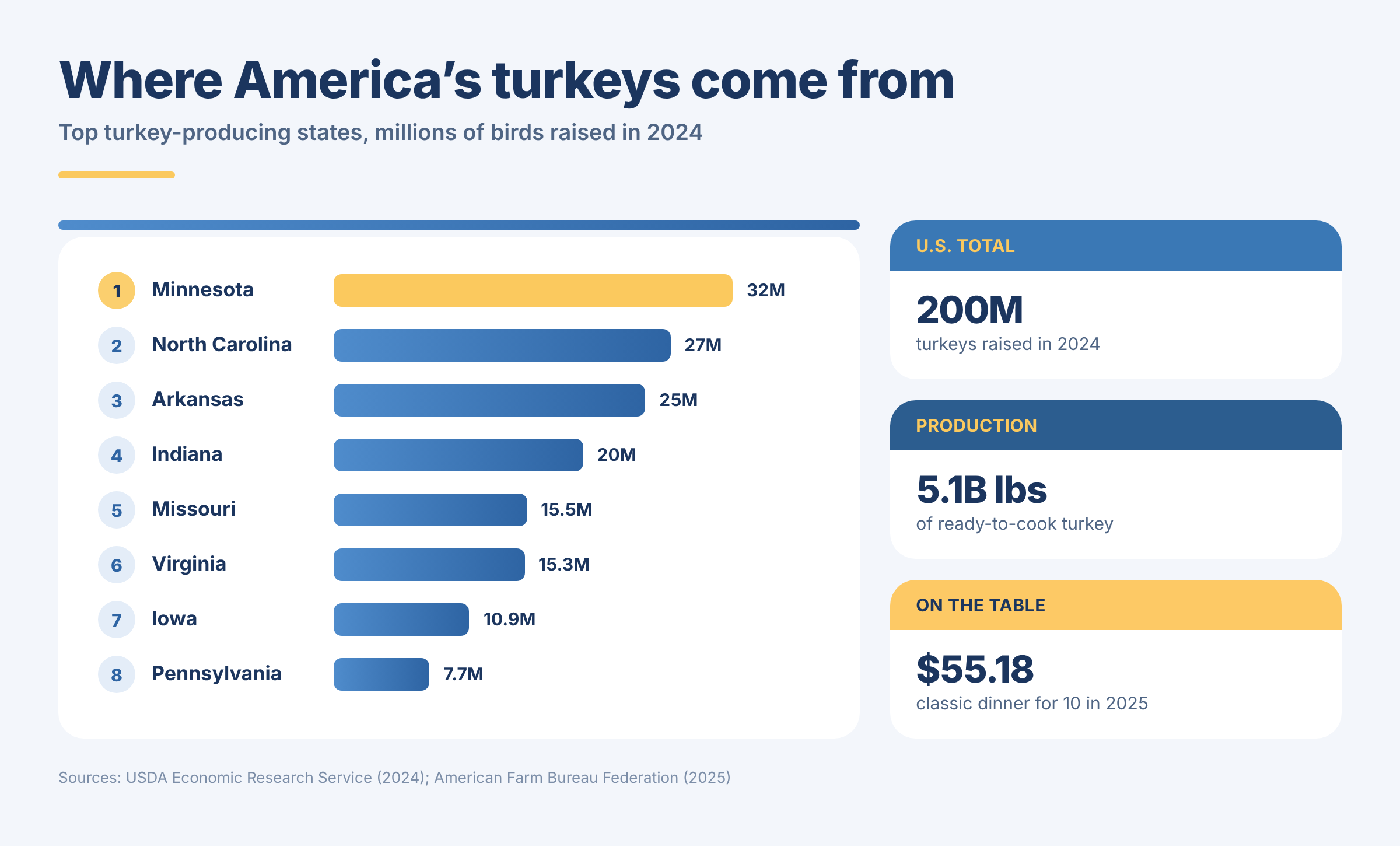
The turkey may be the star of the table, but it's also a big business. U.S. farmers raised about 200 million turkeys in 2024, producing more than 5 billion pounds of turkey meat, according to the USDA Economic Research Service. Minnesota leads the nation, followed by North Carolina, Arkansas, and Indiana.
And it's not just turkey. Thanksgiving drives demand for cranberries, sweet potatoes, pumpkins, potatoes, green beans, and baking staples — supporting farmers, food processors, truckers, and grocery stores along the way.
The good news for families: the American Farm Bureau Federation found that a classic Thanksgiving dinner for 10 cost $55.18 in 2025 — about $5.52 per person and 5% less than in 2024, the third year in a row that the meal got cheaper.
4. A season of charitable giving
Thanksgiving is also about giving back, and that generosity has real economic weight. On GivingTuesday — the Tuesday after Thanksgiving — Americans donated a record $4.0 billion in 2025, up 13% from the year before, according to GivingTuesday.
- 38.1 million people took part (up 6%)
- 19.1 million made a donation
- 11.1 million volunteered their time (up 20%)
Those dollars fund food banks, shelters, and community programs, and they support local jobs and services. For nonprofits, a fast, secure, mobile-friendly donation page has become just as important as a good checkout is for a retailer. In 2026, GivingTuesday falls on December 1.
5. Seasonal jobs and wages
To keep up with the holiday rush, retailers, warehouses, and delivery companies bring on seasonal workers. That extra income helps households and local economies through the end of the year.
But the picture is changing. The NRF expected retailers to hire 265,000 to 365,000 seasonal workers in 2025, down from 442,000 the year before. Many employers, including big-box chains, are giving more hours to their permanent staff and leaning on automation instead of large temporary hiring waves. Meanwhile, interest from job-seekers keeps rising — Indeed reported seasonal job searches up 50% since 2023.
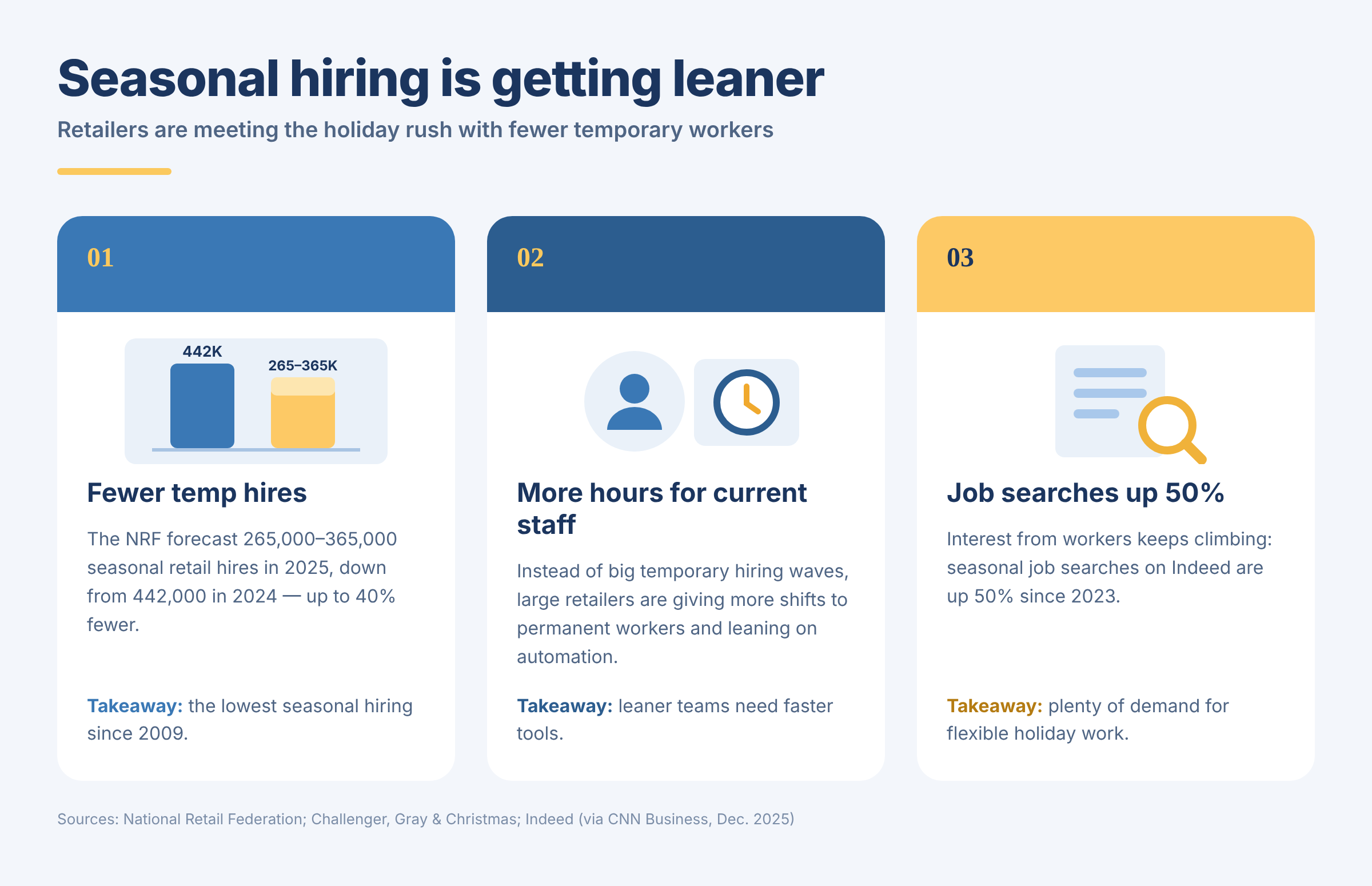
In other words, businesses are trying to do more with leaner teams — which makes tools that save time at checkout and in the back office more valuable than ever.
What it means for your business
Whatever industry you're in, the Thanksgiving effect brings more customers, more transactions, and more pressure on your payment setup. A few things go a long way:
- Be ready for volume. Make sure your payment processing can handle sudden spikes without slowdowns or extra declines.
- Meet customers where they pay. Mobile wallets, contactless, QR codes, and online checkout should all be easy — in store, on the go, and online.
- Protect every sale. Busy seasons attract fraud. Layered security and clear records help you avoid chargebacks later.
- Save your team time. With leaner staffing, fast deposits, simple reporting, and reliable support matter more than ever.
The bottom line
Thanksgiving isn't just a time for turkey and gratitude — it's a powerful engine for the U.S. economy. Record shopping, record travel, a massive agricultural harvest, billions in charitable giving, and seasonal work all come together in a single week, setting the tone for the entire holiday season.
At TCB Pay, we pride ourselves on being a partner you can trust during the busiest time of the year. Whether you run a restaurant, a retail store, an online shop, or a nonprofit, we're here to help you accept payments quickly, securely, and with peace of mind. Happy Thanksgiving from all of us!

 Free Demo with Chris