 TCB Pay Portal
 TCB Pay App
 ACH
Processing
ACH
Processing TCB Pay Issuing
 Alert & Notifications
 TCB Pay White-Label
 Integrations
 IT Solutions
 About
Us
About
Us Pricing
 Blog
Blog Security
 System Status
 Contact Us
 Sign in to TCB Pay Portal
 Sign in to TCB Pay Issuing

 Back to all articles



Chargebacks spike during the FIFA World Cup because transaction volume, cross-border card-not-present payments, and impulse spending all peak at once. Merchants protect revenue by preventing disputes before the event, monitoring in real time during it, and filing representment after it — while keeping their chargeback ratio comfortably under 1%.
Every four years, the FIFA World Cup turns the planet into a single, month-long marketplace. The 2026 tournament, hosted across the United States, Canada, and Mexico, with 48 teams and 104 matches, is the largest edition ever staged. For merchants selling tickets, jerseys, streaming access, travel, hospitality, and everything in between, that means a surge in transactions. And wherever transactions surge, chargebacks follow.
A chargeback is a forced payment reversal initiated by a cardholder’s bank. Handled badly, a wave of them can drain revenue, rack up fees, and, if your ratio climbs too high, put your merchant account at risk. This playbook breaks down why disputes spike during major events, the three types you’ll face, and a phase-by-phase plan to keep your losses low.
Why the World Cup sets off a chargeback surge
Chargebacks rise during the World Cup because several risk factors peak simultaneously — not because merchants suddenly get worse at their jobs.
Transaction volume climbs, so even a flat dispute rate produces more disputes in absolute terms. More fans buy cross-border and card-not-present, which carries higher fraud risk than in-person sales. Emotional, impulse purchases — a last-minute ticket, a jersey bought after a win, a streaming upgrade during extra time — drive both spending and later regret. And because buyers often see a charge on their statement weeks later, a cryptic billing descriptor turns into an “I don’t recognize this” dispute.
The three types of chargebacks you’ll face
There are three chargeback types — criminal (true) fraud, friendly fraud, and merchant error — and each calls for a different defense.
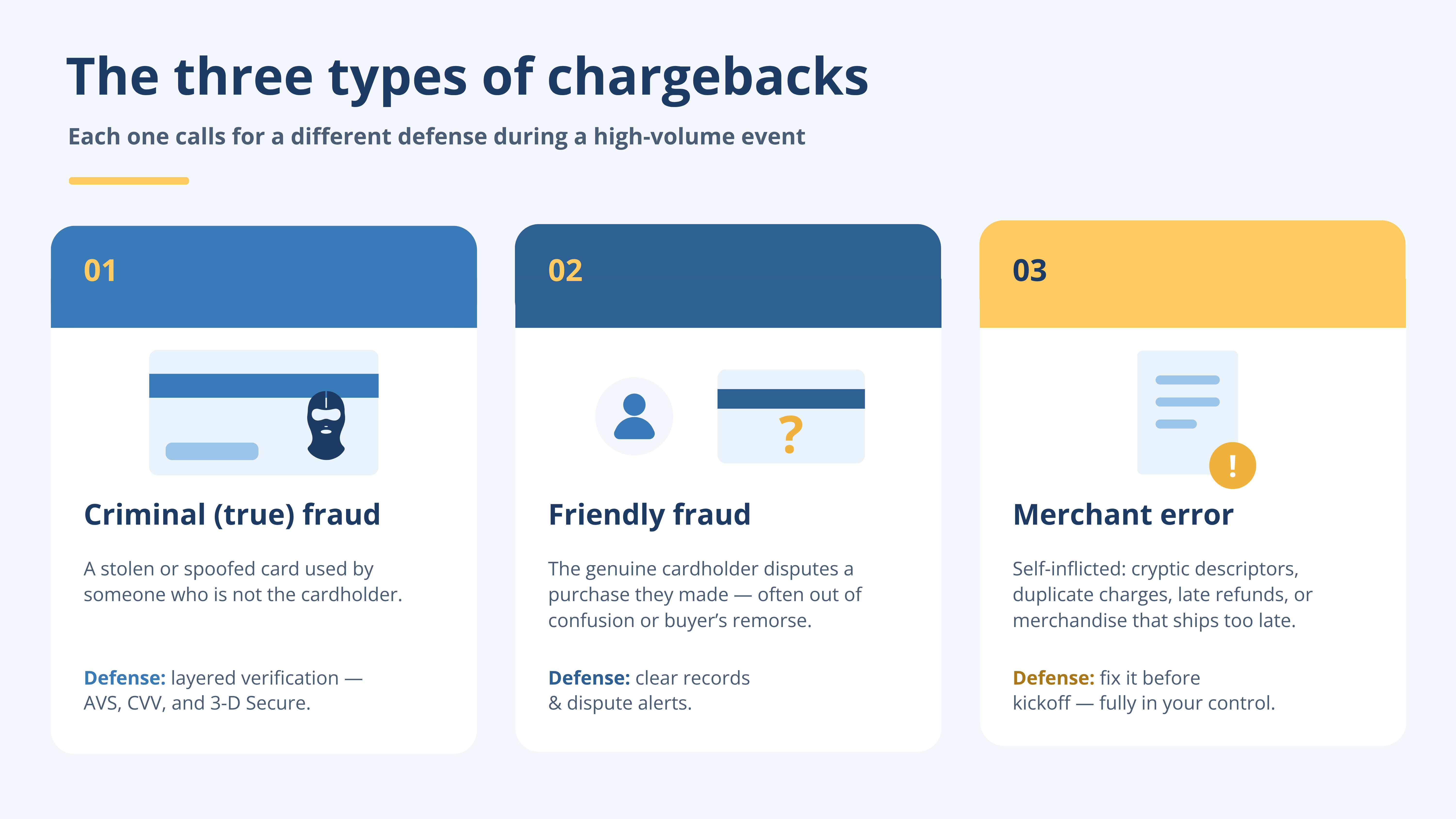
Criminal (true) fraud is a stolen or spoofed card used by someone who is not the cardholder; it is preventable with layered verification. Friendly fraud, or first-party misuse, is when the genuine cardholder disputes a purchase they actually made, out of confusion or buyer’s remorse. It is the most common type during major events and must be beaten with clear records and dispute alerts rather than blocked outright. Merchant error is the self-inflicted category: confusing descriptors, duplicate charges, late refunds, or merchandise that ships after the tournament ends — and it is entirely within your control to fix before kickoff.
Know your numbers: chargeback ratios and thresholds
Keep your monthly chargeback-to-transaction ratio comfortably under 1% to avoid card-network monitoring programs, extra fees, and remediation requirements.
Card networks track the ratio of chargebacks to transactions, and crossing their limits triggers those programs. Visa and Mastercard each publish their own program thresholds, and those figures change periodically, so confirm the current numbers with your processor. Remember that a chargeback rarely costs you just the sale: once you add processing fees, penalty fees, the lost product, and staff time, the real cost is often several times the ticket price.
Your fraud-season chargeback playbook
Defense wins tournaments, so split your strategy into three phases: prevent before the event, monitor during it, and represent and recover after it.
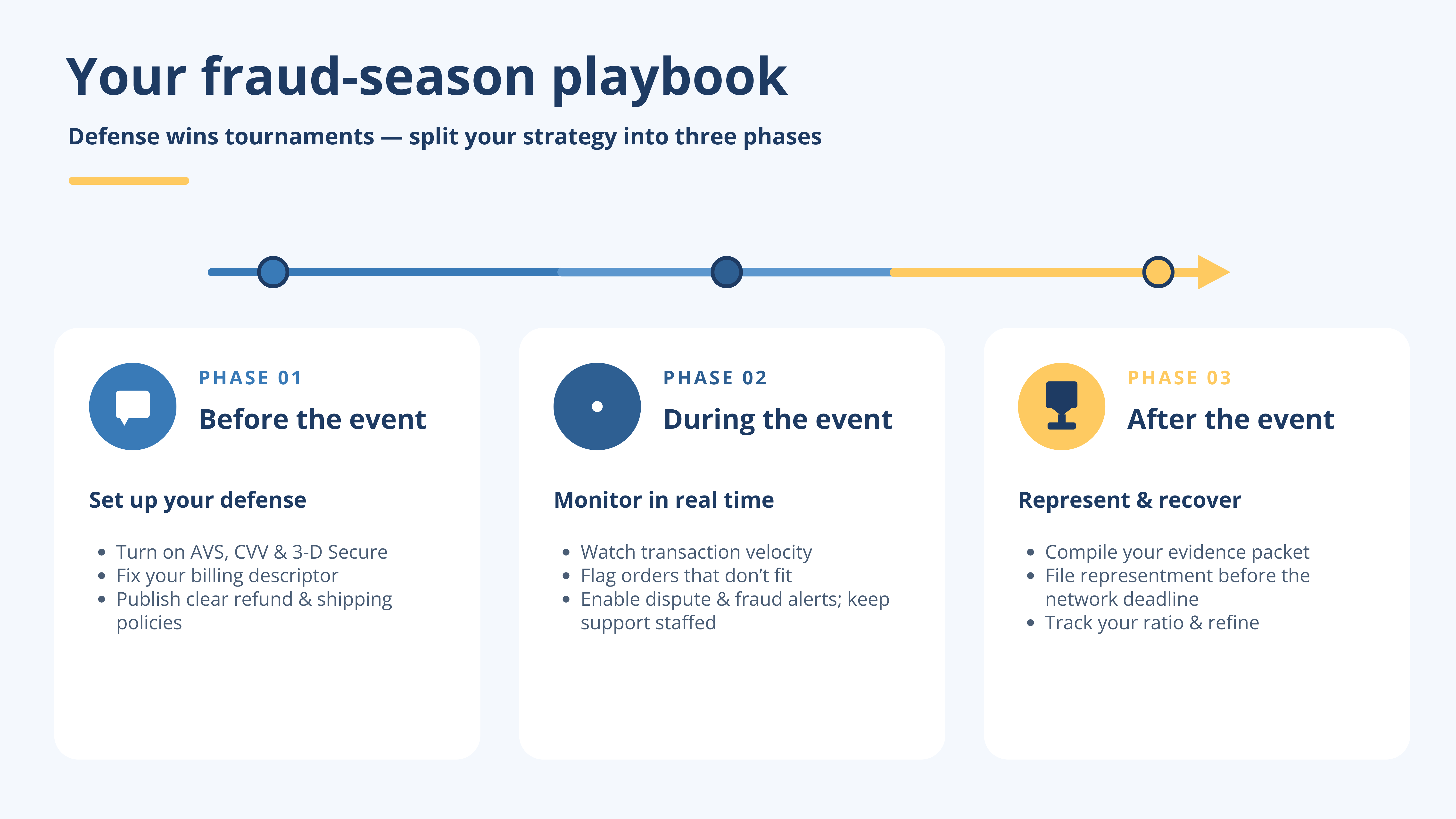
- Before the event, set up your defense: turn on Address Verification (AVS), CVV checks, and 3-D Secure through your payment gateway, fix your billing descriptor so buyers recognize the charge, and publish transparent refund and shipping policies.
- During the event, monitor in real time: watch transaction velocity, flag orders that don’t fit the pattern, enable dispute and fraud alerts so you can refund a questionable order before it becomes a chargeback, and keep support staffed for post-goal traffic spikes.
- After the event, represent and recover: compile your evidence, file representment before the network deadline, then track your ratio and refine your setup for the next big event.
Winning a dispute: how to fight representment
Representment is your formal rebuttal to a chargeback — you win by submitting compelling evidence that the transaction was legitimate, and by doing it fast, because networks set tight deadlines.
A strong dispute packet includes:
- Order and payment records — receipt, order confirmation, and matching AVS/CVV results.
- Proof of delivery or service — tracking numbers, download logs, ticket scans, or check-in data.
- Device and behavior data — IP address, device fingerprint, and purchase history.
- Customer communication — messages showing the buyer authorized and received the purchase.
Pick your battles: fight the disputes you can win with clean evidence, and use pre-dispute alerts to resolve the rest before they cost you. For deeper guidance, see the Visa dispute resolution resources and your processor’s chargeback documentation.
How TCB Pay helps you defend your revenue
You shouldn’t have to fight fraud season alone. TCB Pay pairs a secure payment gateway with built-in fraud screening, real-time reporting, and chargeback management support, so you can catch risky transactions early, respond to disputes with organized evidence, and keep your ratio under control. Whether you sell online, over the phone through a virtual terminal, or in person, the tools scale with your World Cup traffic. To learn more, get in touch.

 Free Demo with Chris